Thursday, 20 May 2021

O'ahu


And so we left the relative seclusion of Hale O Lono harbour on Moloka'i's south coast early on Valentine's day eve to make the short, 45 nm passage to O'ahu across the Kawai channel.  It is best to choose a calm weather day to cross these Hawai'ian channels as they mostly line up southwest to northeast and funnel the prevailing trade winds to be a good 10 knots faster than over the islands themselves.  It was a brisk, but not too exciting sail with O'ahu visible in the distance almost from the outset.  Within seven hours we were safely tucked into our destination at Kaneohe bay, on O'ahu's east coast.

Kaneohe bay is a large bay facing east, protected from the easterly swells by a 4 mile long reef across the mouth of the bay.  There are only two passes in the reef, and we chose the closest one, which took us through clear waters as shallow as 8ft before entering the lagoon itself.  Once inside, we set anchor just outside Coconut Island which was used in the opening sequences of the TV program Gilligan's Island.  Today the island is used as a marine research lab for the University of Hawai'i. We enjoyed this secluded, quiet spot for a couple of days - including Valentine's Day when we opened a bottle of our customary Rose champagne - until we learned that we needed to move to a larger and more populated mooring field close to the He'eia Kea small boat harbour, halfway up the bay.  We were in somewhat of a holding pattern, waiting and preparing for our planned boatyard haul-out in Honolulu about six weeks away.  There was a small chance of a cancellation and a call from the boatyard to come in early, so we wanted to be ready if that happened, although as the days passed and we enjoyed the convenience of taking the bus right outside the boat harbour to the nearby town of Kaneohe with all the usual amenities and a postal delivery service, we were content to just wait and use the time to be fully ready.

Gilligans Island!

In the southeast corner of the bay lies the Marine Air base of Kaneohe, and we were treated, day and night, to the seemingly non-stop comings and goings of various military helicopters and planes.  It made us realise how large the military presence is here, especially since this base is not even the largest on the island, that honour going to the joint base at Pearl Harbour, which we were yet to visit. At least we felt safe here..

We stayed here at Kaneohe for almost three weeks.  As I mentioned, the bus stopped right outside the harbour and it was an easy 10 minute ride to the town centre, and only a 40 minute ride for the seven mile trip across the mountain to Honolulu.  The island of O'ahu is full of rugged peaks in the interior, and a coast road encircling almost the whole island, and so we took the opportunity to rent a car, as we often do, to explore the island a little.  As expected, outside of the main conurbation of Honululu, with its population of almost 400,000, the towns are small and cosy, with a definite retro vibe of old town America and the surfing culture.  In particular on the north coast of the island, which is home to many of the iconic Hawai'i surfing beaches such as 'Pipeline', it is so laid back it is horizontal. During these times with little tourist traffic, one can easily imagine how it has been unchanged over the decades, just a lovely, relaxed pace of life.  Back in Honolulu, however, it's big city life as usual, and it was interesting to see the contrast of life in the two parts of the island just a few miles apart.  One of the most impressive geographical features of O'ahu is Diamond Head crater, an inactive volcanic cone just east of Waikiki.  It's possible to drive inside the crater through a man made tunnel in the crater wall, park and hike up to the summit of the rim.  Not a terribly difficult hike, but busy and hot - but the view was worth it.  One can see the whole of Honolulu in panorama, with all the beaches, surfing, high-rise buildings, and the open Pacific spread below like a carpet.

The steps up to Diamond Head summit

Top of the world!


We do love a museum, especially one that showcases the local culture and history, so we were not disappointed with the Bishop Museum in the Honolulu suburbs.  Unfortunately due to Covid the famous planetarium and some other smaller parts of the museum were closed, but we were able to enjoy a comprehensive and beautifully presented history of the Hawai'an islands, up to post second world war times.  Especially after learning the history of French Polynesia, this really 'closed the loop' for us in terms of understanding the migration and settlement of the Pacific peoples.  the Hawai'ian royalty is quite a story, and is still proudly remembered by statues, buildings, monuments and street names all over.  I liked that the United Kingdom Union Jack is featured as part of the Hawai'an flag, and we discovered that the islands enjoyed a close relationship with the UK, particularly during the reign of King Kamehameha I in the late 18th century.

Thats a real whale carcass in the Bishop Museum

We had mentioned before that Hawai'i is not particularly blessed with idyllic anchorages for cruising yachts, and O'ahu is no different, especially in Honolulu itself, and so when it came time to move the boat close to the boatyard for our looming haul-out date, we found ourselves taking a mooring ball in a large, impersonal mooring field close the airport and in a very industrial part of town. It wasn't pretty, but since we were only a few hundred yards from the haul-out slip itself, it was fit for purpose.  We spent the next weeks gathering supplies, and even starting some of the refit work ahead of the boatyard since the mooring was calm and protected.  One of the main pieces of mechanical work was to fit clutch upgrades to the two Yanmar saildrives, which involves removing the internals of the gearboxes and fitting new bearings to the clutches.  Friends on the catamaran Moorea, whom we had met in Panama had spent the last year in Hawai'i and were also keen to do this upgrade, so Johan and I shared the work and experience.  Many other smaller projects were ticked off the list while on the mooring ball, so we could minimise our time on the hard.  One particular task that looked a little intimidating was to repair our port salon window which had been parting company with the fibreglass frame, almost since we have owned the boat.  Expecting to remove and clean the whole huge window, then reseal it, I was pleasantly surprised to find the sealant to be in good shape except for the front seam, so I was able to make a local repair without too much difficulty.  One final task we managed to tick off the list was Covid vaccination!  Hawai'i was vaccinating fast, and the age eligibility was dropping fast. Thankfully we both managed to be fully vaccinated, me with Moderna and Dara with Pfizer, before we left the island.


Saildrive clutch in pieces!


One last must-do in O'ahu is Pearl Harbour.  We booked a visit online, as is necessary now, and spent a day between the Arizona exhibit and the museum which tell the story of the second world war attack and its aftermath.  We also visited the submarine Bowfin, and learnt all about the evolution and use of submarines in warfare.  It was a sobering trip on the short ferry ride over to the Arizona memorial.  The USS battleship Arizona lies on the seabed, clearly visible just under the surface, just as it sank on the morning of 7th December, 1941.  Interred in the wreck are the bodies of many US servicemen who died that day, and it remains a monument and reminder of the evil of war to this day.  Hawai'i was, and still is home to many thousands of Japanese migrants and it is testimony to the human ability to forgive that many of them walked alongside us that day, hoping mankind learns from his mistakes. 

Torpedo tubes ready!

On the ferry over to the Arizona memorial


The remains of a gun turret on the Arizona

the USS Bowfin

Eventually the day came for the haul-out - April 1st.  We motored the few yards down to the slip, which as it happens is only a few inches winder than india itself, so we relied on the expertise of the yard crew to gently guide the boat into place with dock lines, and secure the travel lift straps in place for the big lift.  An hour later, india was in place, on blocks in the yard, the hull pressure washed and ready for a good bottom scrub and touchup!  Our intention was to take around six to seven days to complete the list of work, and whilst on the hard we had booked a hotel in Waikiki so we could refresh ourselves each day in relative comfort.  Boat work is hard and dirty, and having a bath, comfortable bed and restaurants on hand is a necessity we could not manage without.  The work proceeded without too much drama, and we managed to sand and paint the bottom, change several through-hull fittings that were old and tired, refit rudder bearings, and some much needed welding and other work on Tuk-Tuk, our faithful (and essential) dinghy.

A tight fit for india!

15 tons....
One of the new through-hulls

Rudder bearings to be done..

Starting to look good

Starting to look great!

Like most of our boatyard experiences, whilst there we were lucky enough to make some new friends.  On one side of us was Don, who was having his small monohull Minggat painted prior to a passage to Fiji, and on the other side was Terry, an extremely interesting veteran who was repowering his SeaRay cruiser.  Don had a local PO box arrangement for shipping and was kind enough to allow us to direct a few Amazon packages his way, as well as giving us rides when we needed to shop for something.  Terry is the kindest man you could imagine, and we were honoured to be invited to his house for dinner on several occasions and he offered the loan of his car almost anytime we needed it.  This was particularly valuable and appreciated since Hawai'i was suffering the ubiquitous rental car shortage now that tourists were starting to come back, and rental cars, if they could be found, were $700 a day!!!  Uber is here in Hawai'i, but again, demand meant long wait times and expensive rides.  We became quite close to Terry and had made a plan for him to join us on our passage to Kauai, since he had family there and was eager to experience an overnight sail.  As he was finishing the work on his own boat, it looked as though the stars would align and he would be back in the water just in time from him to join us, but fate had other ideas, and a health episode that took Terry to hospital two days before departure, resulted in him being scheduled for a triple bypass and aortic valve replacement surgery just a few days later. We were so upset, and had really been looking forward to spending the time with him, but grateful his health was being attended to as a priority.  (Several days post-op as I write this and it seems the surgery was a complete success and Terry is doing great!!!). 

The lanai at Terry's house

Back in the water, and india still floats!  So our hull work was successful..we positioned back on the mooring ball as we planned our final passage in Hawai'i - to Kauai, and then the big passage to Fiji.  Final cleaning and minor projects are done, and india has never been in such good shape.  Everything works, all preventative maintenance is up to date, sails are repaired or new, we have full water and fuel - we are READY!!


Sunday, 11 April 2021

Moloka'i


Out of the eight major islands most recognized in the Hawaiian Archipelago,  Molokai is fifth most populated.  At its extreme length and width of 38 by 10 miles, it is also the fifth largest in size.  The locals gave the island the nickname of Aina Momona, which means the Friendly Isle, and that is how we remember Molokai.  Everyone was so very friendly and helpful, and curious but delighted to see catamaran india, one of the few visiting boats, in the main harbor.

Polynesian settlement to Molokai arrived in two waves from the Society Islands starting in 1025 through 1120 and again from 1190 to 1290.  The first European to set foot here was Captain George Dixon of the British Navy in 1786, followed by a Protestant Mission established on the eastern end at Kalua’aha.  By 1878, an immigrant from Germany built the first and only Sugar Mill and ranching began in the first half of the 19th Century when King Kamehameha V set up a country estate on the island which was managed by this same German, Rudolf Wilhelm Meyer, and is now the Molokai Ranch.  King Kamehameha V eventually built a vacation home in Kaunakakai and ordered the planting of over 1,000 coconut trees in the Kapuaiwa Grove.  But the history of Molokai that I found most fascinating, is the story of the Leper Colony, on the remote peninsula of Kaluapapa in the north, isolated from the settled lands by an enormous and impenetrable range of mountainous cliffs.


As the sugar plantations developed in Oahu in the later half of the 1800s, more and more Eurasians immigrated to work the fields along with sailors, traders and others from societies where smallpox, cholera, and whooping cough were endemic.  The exposed island communities lacking natural immunity, were soon ravaged by these diseases and the worst of all, was leprosy.  Fear and worry of the population and sugar planters pressured the government to take action to control the spread of leprosy in particular.  The legislature passed an act requiring the quarantine of people infected with leprosy and established the colony of Kalawao which operated from 1866 to 1969.  A research hospital was developed and the colony was assisted by Father Damien of the Philomena Catholic Church, who also died of the disease after 16 years of service.  The population reached a peak of 1100 at the beginning of the 20th Century and over the decades, more than 8500 men, women and children diagnosed with this cruel disease were exiled to the colony and declared legally dead.  Unaffected spouses were granted automatic divorces and the remainder of the disease free family members changed locations, sometimes to other islands, to avoid ostracization by their communities.  Even though there are no active cases here today, former patients have chosen to continue their lives in the settlement and have established the Kalaupapa National Historical Park welcoming visitors who arrive by small aircraft or by an all day donkey trail excursion over the mountain ridge which we would have loved to have done!  But alas, the trail washed away with heavy rains last year and furthermore the settlement is closed to visitors to protect the inhabitants from the Covid!


So, our only option (besides renting a helicopter) to see this stunning landscape that I had read so much about, including the towering cliffs reported to be the tallest sea cliffs in the world, was to sail around the northern coast.  We set off on a sunny morning with a favorable weather window and chased a rainbow across the narrow Pailolo Channel, notoriously one of the windiest channels between the Hawaiian Islands.  What started out as a beautiful clear day soon turned wet and foggy as a series of rain squalls moved in.  Ever determined, we sailed along the jagged edges and steep ravines revealing high-reaching waterfalls in a daring proximity to land until all visibility was lost.  At this point we knew it would be unsafe to attempt our planned anchorage tucked around a point and hidden completely from us.  Not only were we disappointed to miss out on a night along this magnificent shoreline but now had several more hours to travel to our alternate haven on the west coast.  As we steered a course around the flat triangular peninsula of Kaluapapa, the fog lifted and we were able to view the lighthouse and the settlement of Kalawao barely apparent in the distance.  I took a few somber photographs that I like as they reflect the mood of our sail around this extraordinary and quiet place in the shadowlands.


The sun was low on the horizon as we rounded Ilio Point on the Northwest Corner.  There was no clear indication of good anchorages on the charts so we chose a sandy patch in an indentation near a small beach in the northern corner and settled in for the night.  What started out as a sheltered refuge from the windward coast we had just sailed, became an unbearable whirlpool of building sea over the course of the night and by first light we were ready to up anchor and move on.  As we prepared to weigh anchor in the early morning hours we saw a large sea lion off our stern who gave us an encouraging look with his big black puppy eyes, as if to say, “Get out of here while you still can!”  Unfortunately, we had been nursing our starboard engine because of a fan belt that needed attention (in calmer waters preferably) and it soon became obvious that we would make no progress without using both engines against the winds and swells that had shifted south and west, the direction we needed to go, of course.  After several miles of small gains against the weather, we decided to tuck into the southern edge of Papohaku Beach and wait it out.  We spent the rest of the day bouncing around in a tolerable swell trying to get a better weather forecast with our faint cell signal.  Again, by the early hours of the next morning, we knew we needed to move.  We could feel the intensity of the swells that had been building throughout the night and since we were not anchored far enough from the break line, we needed to move quickly.   By now, the wind had a decidedly western origin which helped build the seas in our anchorage.  We could use this wind to sail and the elements would no longer work against us as we headed south.  As we brought in the chain on the back of a wave, it caught and swung the bow around hard.  We knew we were hooked around something substantial on the bottom.  The process is to let out more chain and try a different approach and direction, which we did, but in a heavy and potentially breaking 2+ meter swell it starts to become dangerous and a lot of bad things can happen.  In our case that morning, the clutch on the windlass slipped and ran the chain out at speed, and this is a good thing, scary as it is when it happens, because if the chain is secure to the windlass under that amount of pressure, the risk is pulling the entire apparatus out of the deck!  The chain had run out to the rope end of our abundant rode before I could catch up to it with the engines while fighting the rush of a swell and as David pulled the line in by hand to recover the chain, another swell broke taking the line back and with it a chunk of David’s finger!  There was blood all over the deck, not in itself anything new, but this time seemed different and I could tell by his expression that it was serious.  We spent a few minutes wrapping his finger before we were back at retrieving the chain, at least in part, to secure our vessel while we decided on a new course of action.


Someone had to go in the water.  It was the only solution.  We needed to assess the situation of how the chain was wrapped and if it could be untangled at all before we talked about abandoning our valuable ground tackle with a buoy for a later retrieval.  I wanted to go, feeling bad about David’s injury, but strength of success lies in appropriate assignment and my strength is behind the wheel and David’s strength is… well…strength, in this case.  It was too dangerous to bob the surface in the now breaking waves with a snorkel and fins.  SCUBA was required to get below the surface and quickly.  In addition, we needed to secure David to the boat with a long heavy line so that we could get him back to the boat as well.  As I paid out his tether from the bow, I watched his bubbles while noting some directional reference.  When he told me we were only snagged at one side of a big rock while the anchor was in a patch of sand, I had a better idea of what to do next.  Sometimes a guess can tangle a line further if you circle the boat the wrong way, and now that we knew how we were snagged we had a chance!  Sure enough, fortified with David’s intelligence in the field, so to speak, we were able to drive out our chain even in the breaking seas.


With a rush of relief and big happy smiles, we charged out of the bay and turned south.  Within a couple of hours, we rounded the southern point and turned east.  It was as if a new day had dawned.  The morning sun was glorious, glittering the surface of the now calm waters in the lee of Molokai with dancing light.  Soon we negotiated the narrow channel into the old barge harbor of Hale O Lono and dropped our precious anchor through 15 feet of calm water into the safety of soft mud with a plonk!  A couple of Bloody Mary’s were immediately in order followed by first aid and a long nap to make up for the previous two sleepless nights.


After a couple of restful nights in Hale O Lono, we pressed on to the small village of Kaunakakai for a visit on land.  The harbor has a long commercial pier which was empty when we arrived.  We had seen the many large tug and barge vessels that transfer inter-island cargo in the Hawaiian Islands, and found a place for ourselves in the shallows well away from the turning basin of the inbound suppliers.  We were the only visiting boat and there was scarcely room for us to swing the full 360 degree radius that we have learned to expect here.  It was a pleasant walk into town and we were excited to explore our surroundings, pick up some groceries and try the local pizza.  At a glance, Molokai seems like a remote place.  The beautiful long beaches are void of crowds, there are miles and miles of scrubland interrupted by occasional dirt roads and no high rises.  There are no traffic lights, a handful of restaurants, and only one hotel.  It is quite the surprise since the island is centrally located between the more commercially popular and well known Islands of Maui and Oahu.  The reason for its remote feel is due to the local population and generations of aggressive opposition to economic development.  There is a litany of reasons behind the resistance to commercial enterprise but having traveled to both the busiest destinations as well as the extremely remote areas of the world and watched the development of my favorite Caribbean islands, I personally found Molokai to be a refreshing example of a population strong enough to resist exploitation and preserve the local tradition that is rapidly disappearing from these culturally rich Hawaiian Islands.


Once again the time had come to move on, this time to Oahu, the epicenter of Hawaiian population and the capital city.  Our haul out at a ship yard was set and we needed to focus our attention on our faithful india who was due some examination and physical affection.  Besides….Pearl Harbor awaits!

Sunday, 4 April 2021

Maui

After the beauty and majesty of the Big Island, we looked forward to the next island in the Hawaii chain - Maui.  We had positioned ourselves at the top of the Big Island, with an upcoming favourable weather window to cross the notorious Alenuihaha Channel between the two islands.  Due to the topography of the islands, being steeply mountainous, with a narrow strip of sea between aligned to the prevailing Trade winds, this channel has a reputation for deception - the wind is almost always at least 10 knots higher in the channel due to the venturi effect, and the seas can be huge, making it challenging for smaller craft at all times.  We felt we had timed it well, and with an early start to try to beat the building wind and waves during the day, we headed out in the direction of Maui.  As it happened, it was a rather nice sail, with a brisk but not troublesome NE wind on the beam and making good speed. Even the waves were not mountainous so we were left wondering a little - 'what was all the fuss about?'. Around lunchtime we were in sight of Maui and soon found ourselves passing up the western coastline of the larger southern part of the island.


We had heard about an interesting small island called Molokini, which lay on our path to Lahaina, out intended anchorage.  It is a crescent shaped outcrop with sand and coral surrounds, and was a favourite snorkelling and diving destination for tourist boats.  We were prepared to stop for a break and take a look, and maybe even jump off for a swim, but were disappointed when we arrived there.  There were no other boats there right then, but it was a very tight crescent with only submerged mooring balls and no anchoring allowed.  We decided it was cool that we had taken a quick look, but that was all it deserved.  On to Lahaina!

Lahaina was once the whaling capital of the world, and within 10 miles of Lahaina, we could see why.  This was humpback whale season and we could see spouting whales in the distance all around.  Back in the 1820's, whaling boats from all over the Pacific would visit Lahaina to hunt the abundant over-wintering whales and pull the huge creatures aboard their specially adapted boats.  They were terribly wasteful and only extracted oil from boiling the blubber, often throwing the huge carcasses overboard to rot in the sea.  By the mid 1800's however, whaling lost favour to goldmining and never again were the whales hunted in such numbers.  Today 6,000 to 7,000 humpback, sperm and right whales come to the area to spend the winter and visitors from all over the world take boat trips a short way out to view the whale families as they frolic in the shallow, warm waters around Maui.  As you'll see, this was just a small taste of what was to come.

india anchored with Lanai in the background

Approaching Lahaina in the late afternoon, we found an easy anchorage not far from the town marina and dock, and set the hook in the typical rocky and gravelly seabed.  The next morning we dinghied ashore to visit the harbourmaster to present our negative Covid tests - a necessity when travelling inter-island into Maui, and to pay our anchor fees - a peculiar and annoying ruling in Hawaii for cruising boats.  We also had the chance to meet up with Vicky and Greg on Sirena, who we had met in the Tuamotus and whom had passaged to Hawaii a few weeks before us.  They had been in Lahaina for a few weeks and were able to give us a useful download on what was going on.  A quick walk down Front Street gave us the impression that this was an old western frontier town, on a cute island.  Lots of whaling stores, and memorabilia and of course surfers.  We had just missed the major Maui Pro surfing competition just close to here, where unfortunately a man had been bitten by, but survived, a Tiger Shark.  This made us nervous to swim, but in any case the water was cold and not at all clear, having been spoiled by the warmth and clarity of the French Polynesian waters!

Lahaina from the drone
Surfing, baby!

India at anchor

Lahaina proved to be very casual and laid-back and a perfect spot to explore the island of Maui.  As is usual, we rented a car for the day to explore.  Maui is quite a bit smaller than the Big Island, so could easily be circumnavigated in a day.  There are two mountainous areas, a smaller one in the North and the larger one in the South, separated by a flat isthmus where lay the main town of Kahalui and the airport.  The coast road around the Northern part is particularly interesting with many precipitous dropoffs and sections of single track road.  The views out to sea were of course spectacular.  The main town of Kahalui is as you would expect, with the usual malls, outlets and hustle and bustle of a large US town.  Coming out the other side however, one has the scenic view of one of the best surfing spots on the island, with huge swells and breakers rolling in from the North East.  This small surfing town, Paia, was very quaint, and was home to one of the best restaurants on the island - Mama's Fish House.  The first time we drove through here, we never even noticed it but my old boss from years ago messaged me to urge us to visit it - as he put it - one of the best restaurants he had been to, and I know he has visited quite a few.  So on the second occasion we rented a car, we made a reservation and had one of the best meals we have had for quite a while.  If you ever visit Maui, it is a must-do.  Having the car meant we were able to catch up with an old acquaintance of Dara's from St Martin, who had moved to Maui.  We spent a pleasant hour or two with Marianne and Don, enjoying a homemade Lilikoi (passionfruit) beverage.  Marianne proved to be a useful local contact as she was able to send us weather warnings before we saw it anywhere else!


Warning says it all..

Blow hole!

Mama's Fish House in Paia, Maui

Some extreme surf sports in Paia


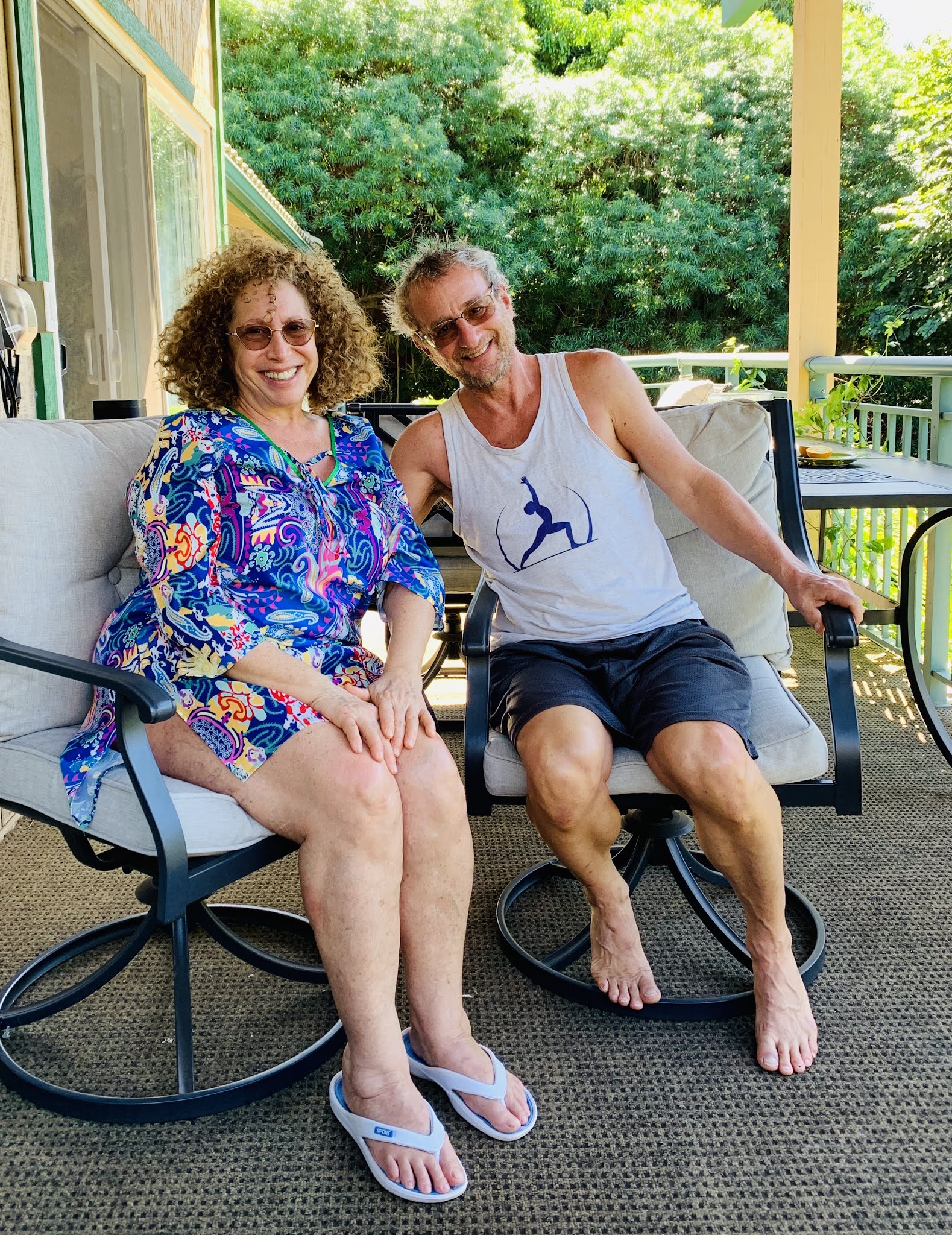
Marianne and Don at home...

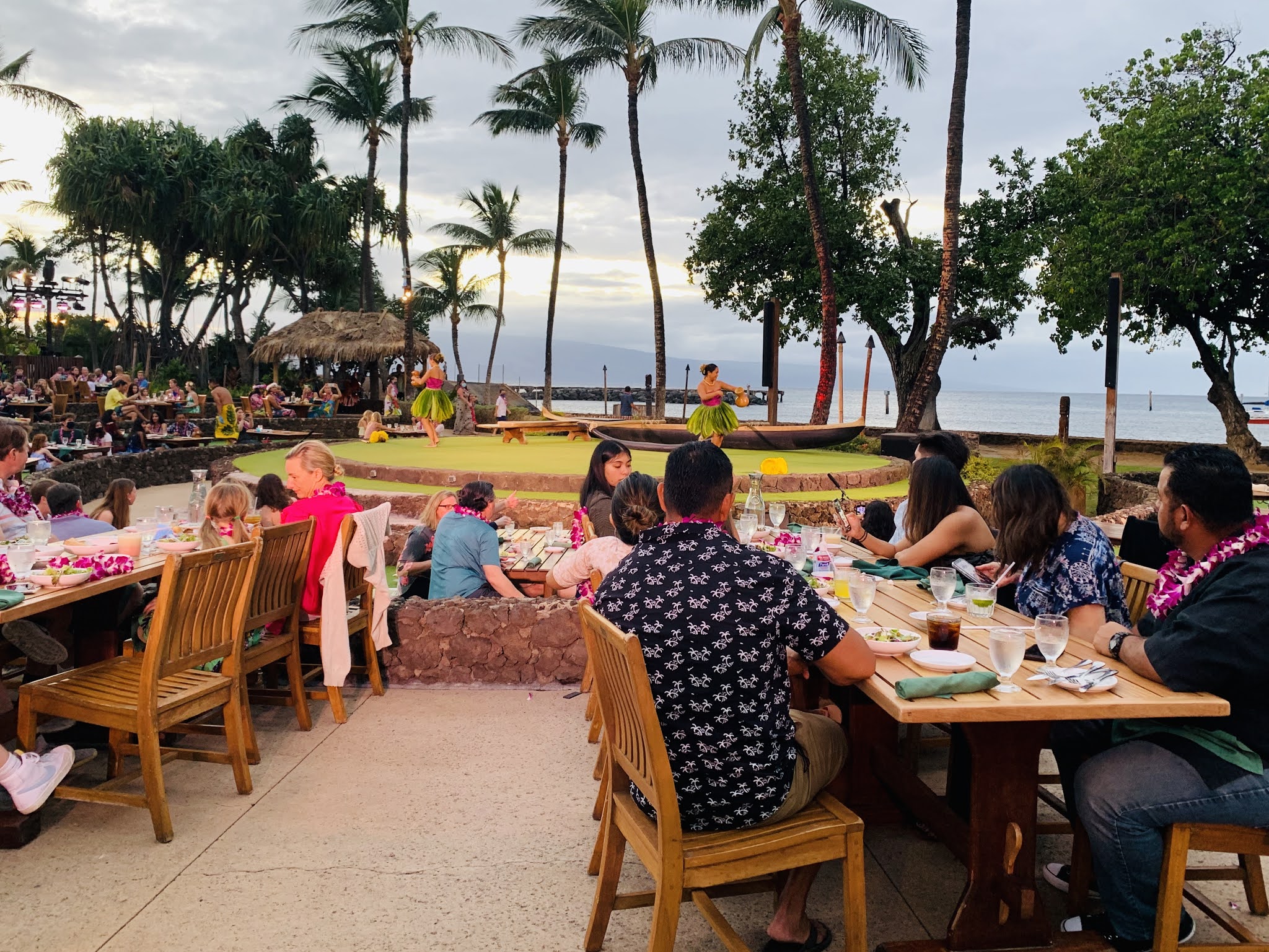
We arrived in Lahaina the week before Christmas and decided we would spend Christmas day with our friends Vicky and Greg.  On Christmas morning they arrived by dinghy, suitably garbed for Christmas and we started by having a snack of homemade sausage rolls and champagne before opening pressies.  Later we enjoyed lobster risotto and more champagne.  Vicky had also planned a Luau for the four of us a few days later.  Despite Covid the traditional Luau centers were still able to function, with suitable social distancing and gave an interesting dance show telling the history of Hawaii and Polynesia, whilst enjoying a feast of local foods and drinks.  All in all, a very enjoyable Christmas break with good friends.


Homemade sausage rolls!

Tree and pressies
Local Luau

We had planned to stay in Lahaina only two or three weeks before moving on to Molokai, but india had other ideas.  During some planned maintenance on the starboard engine, I discovered some severe corrosion damage to the heat exchanger.  Severe enough that a new heat exchanger was needed and we had to wait a week for it to be delivered from Florida.  One of the attractions of Lahaina was that we could have mail and packages delivered to the local yacht club for pickup, and they came to know us quite well. Eventually the large box with the new (and expensive) heat exchanger arrived and within a day or two it was fitted and all was up and running again.  This had delayed our departure, and together with waiting for the appropriate weather window to move on, we eventually stayed here a full month.  Did I mention whales??  The anchorage was surrounded by breaching whales, so on many occasions during our prolonged stay, we would either weigh anchor and chase whales we had spotted close by - often giving chase with a small flotilla of local charter boats full of tourists, or sometimes we would just jump in the dinghy and speed off towards them.  We would always give the whales a respectful distance, after all, you wouldn't want one surfacing right underneath you!  We managed to take many breathtaking photographs of the whales close up, and one dark evening as I was sitting on deck, I heard the unmistakeable sound of a whale spouting, just yards from the boat, in only 30 feet of water.  Magical, huge, gentle creatures.  Dara learnt from a local that the whale calves were known as 'pickles'! Too cute, despite being half a ton in weight!

The damaged Heat exchanger


Shiny new one


Lahaina proved to be a loveable, quaint town with lots to enjoy, from surfing, bars, breweries, museums, restaurants and beaches.  And as so often this last year, made all the more adorable by the relative lack of tourists.  We feel so lucky to be able to enjoy these destinations like this!

Huge banyan tree in Lahaina

From the local prison museum during whaling times....

View from the top of the Haleakala volcano in the south


The observatory atop Haleakala